

Email Creep
Here's how to put it back in its place

Image - pixabay.com
I haven’t written about email for a while, but it keeps coming up in workshops and conversations. Not because people don’t understand how it works, but because even when they think they’ve got it under control, it has a nasty habit of edging its way back to the top of the priority list.
Most of us start the day with good intentions. There’s something we’re meaning to get on with, perhaps a report that needs finishing or a conversation to prepare for. Then we fire up the laptop, glance at the inbox, and before we know it, we’re working our way through anything that’s arrived since yesterday when we switched off. It doesn’t feel unorganised, but it does mean that other people’s needs have quietly taken priority over what we had already decided was important.
Part of the issue is simply that email is easy to dip into. It’s there as soon as you log on, and it gives you something clear to respond to. Answering a few messages can feel like progress, especially when you can tick them off quickly. The difficulty is that this can become your default way of working, and the bigger pieces of work keep being nudged further down the day.
One way to resist temptation is to decide what you are going to focus on before you open your inbox at all. That might mean writing down your first task the day before, or simply reminding yourself as you switch your computer on. If you begin with that piece of work, even for twenty minutes, you have already made a choice about how your time is going to be used. Your inbox can wait while you do that.
Another common trap is leaving emails sitting there because they represent something you need to do. I’ve done this myself. An email requires thinking about, or action, or even someone else’s input, so you leave it in the inbox as a prompt (you might even flag it so it stands out more). The trouble is, every time you go to your Inbox, you see it again, you read it again, and you spend a few moments thinking about it…again! But, because you’re doing something else, you leave it there. It doesn’t take too many of these emails, hibernating in your Inbox, for the frequent reviewing to impact your time. It’s much more effective, when you first read an email, to decide when you are going to deal with it and make a note elsewhere, then you can move it out of your Inbox, until you actually need to go back to it. Once you have a plan for it, it doesn’t need to sit in front of you all day.
It is also worth being honest about what really needs a response straight away. Not everything that lands in your inbox is urgent, even if it feels as though it is when you first read it. In most cases, if something can’t wait, the sender will say so or will follow up in another way. Allowing yourself a few hours before responding to non-urgent emails is unlikely to cause a problem, but it can give you the breathing space to concentrate properly on what you’re already doing.
Email has a habit of following people home in their heads because they’re not quite sure whether they’ve missed something. Taking a few minutes at the end of the day to look through what has arrived and make a decision about each message can make a big difference. You may not have answered everything, but you’ll know about it, and what you’re plan is for dealing with it. That is usually enough to stop it nagging at you later.
Email is part of the job, and it always will be. The aim isn’t to empty it obsessively or to create a perfect system. It’s simply to make sure that it isn’t the thing that decides what your priorities are and stop you focusing on what’s important.
Previous articles on Email management
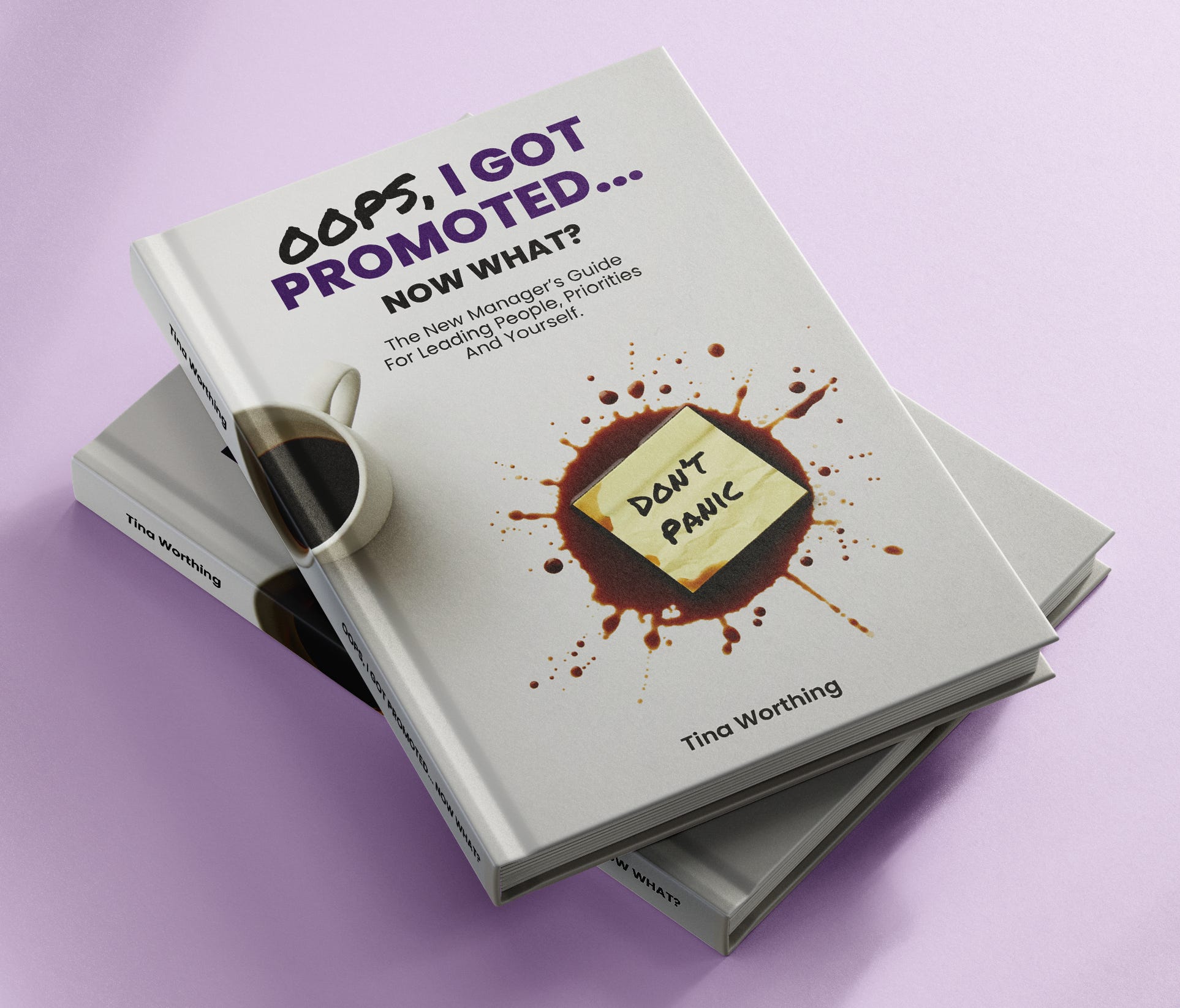
Oops, I Got Promoted…Now What? - Promotion doesn’t come with instructions…it does now! Covering everything from shifting relationships and staying organised, to managing conflict and delegating without guilt, "Oops, I Got Promoted...Now What?" is the handbook every new manager needs (not so new managers can learn a thing or two as well).
If you want to lead confidently, knowing you're doing the right thing by yourself and your team, this is the resource for you.
Aventina Training - Website
The evening scan suggestion is underrated, and I'd go further. The five minutes you spend at the end of the day making a plan for what arrived is about drawing a line between work and not-work, which most people have completely lost. The inbox doesn't stay at the office anymore. It comes home, sits at dinner, gets into bed with you. The scan is less a productivity tool and more a boundary ritual. You're telling your brain the workday is actually over.
What's up, Tina?
How are you doing?
Spent an hour or two yesterday clearing a couple of email boxes - there were the usual suspects of nice emails that sit there to cheer me up - archive them - those that were reminders to do things - do them - the endless notifications - delete - and the email threads that somehow take up the most space - delete
It almost feels like productivity cleaning it up