

How You Doin'?
A time for self-reflection


Image - pixabay.com
Most managers have a sense of how they’re doing. The trouble is, that sense is often based on the busy, reactive version of the job rather than a more considered view of day-to-day management abilities. This short self-assessment won’t give you a definitive answer on how you’re doing, that’s not possible in a generic eight question article, but it might give you something worth thinking about.
Be as honest as you can. The first answer that comes to mind is usually the right one.
1. A team member makes a significant mistake on a piece of work. Your first instinct is to:
a) Deal with it yourself to make sure it gets fixed quickly, and have a word with them afterwards.
b) Ask them to talk you through what happened, find out what they’ve learned, and agree how to put it right.
c) Feel frustrated but say nothing, you don’t want to knock their confidence.
d) Wonder whether you should have checked in on the work earlier.
2. It’s Thursday morning and you realise the week isn’t going to plan. Do you:
a) Push on and try to cram everything in before Friday, staying late if necessary.
b) Quickly reassess what still needs to happen this week and have conversations about the rest.
c) Feel stressed but carry on as though everything is fine.
d) Accept that some things will carry over and make a note of what to pick up on Monday.
3. A team member asks for your input on something you think they could work out on their own. Do you:
a) Answer the question, it’s quicker and they’ve asked for the support.
b) First, ask what they think and then use that as the starting point for dealing with the issue.
c) Feel slightly impatient but give them the answer anyway.
d) Suggest they have a go and come back if they’re still stuck.
4. You’ve been meaning to give someone some difficult feedback for a couple of weeks. Do you:
a) Wait a bit longer for the right moment, it’s sure to turn up soon.
b) Accept that the right moment is unlikely to appear so book some time with them.
c) Drop a few hints and hope they pick up on what you mean.
d) Have the conversation informally when the opportunity presents itself, even if the timing isn’t perfect.
5. Your diary is full for the next two weeks. A new piece of work lands on your desk. Do you:
a) Add it to the list and hope you can fit it in.
b) Look at what’s already committed and have a conversation about priorities and how this new task fits in.
c) Take it on without saying anything, you don’t want to appear unable to cope or unhelpful.
d) Challenge whether it can wait or be done by someone else.
6. A team member seems a bit flat lately but hasn’t said anything. Do you:
a) Wait for them to bring it up, you don’t want to pry or make them feel uncomfortable.
b) Find a quiet moment to check in, without making it a formal conversation.
c) Mention it to a colleague to see if they’ve noticed anything.
d) Drop it into a one to one and see whether they want to talk about it.
7. You finish a particularly difficult week. How do you feel:
a) Relief that it’s over, then mild dread about next week being the same.
b) Satisfaction at what went well, reflective of what didn’t, and clarity about where to start on Monday.
c) Uncomfortable that you probably could have handled several things differently, with a tendency to replay them over in your head.
d) Tired but broadly fine, difficult weeks are part of the job.
8. Thinking honestly about your team, you would say:
a) They rely on you quite a lot, but that’s probably because the work demands it.
b) They’re fairly independent, and you’re working on developing them further.
c) You’re not entirely sure how they’d cope if you weren’t available for a few days.
d) They could manage without you for a while, which is something you’ve deliberately worked towards.
What Your Answers Might Be Telling You
Rather than adding up a score, have a look at which answers you chose most often and look at the summaries below.
If you chose mostly B and D answers
You’re probably doing better than you think. You have a reasonable instinct for when to step in and when to step back, you’re willing to have the uncomfortable conversations, and you’re thinking about your team’s development rather than just getting through the week. The main thing worth watching is whether you’re being honest with yourself about the areas where you default to the easier option, because everyone does sometimes.
If you chose mostly A and C answers
There are some habits worth examining, not because you’re doing a bad job of managing, but because you might be making your job harder for yourself than it needs to be. Doing things yourself rather than delegating, waiting for the right moment that never arrives, carrying on as though everything is fine when it isn’t, these are common and understandable management habits, but they tend to build pressure over time. Picking one question, look at the B and D responses and see if you could try that approach next time the situation arises. After a while try another one. You’ll notice a difference in yourself and your team.
If your answers are a real mix
That’s probably the most honest result of all. Most managers behaviour varies depending on the day, the person, and the circumstances. In some ways the most useful question is this one - which of the eight questions made you pause the longest before deciding the answer. That’s a good indication of where your development challenges lie.
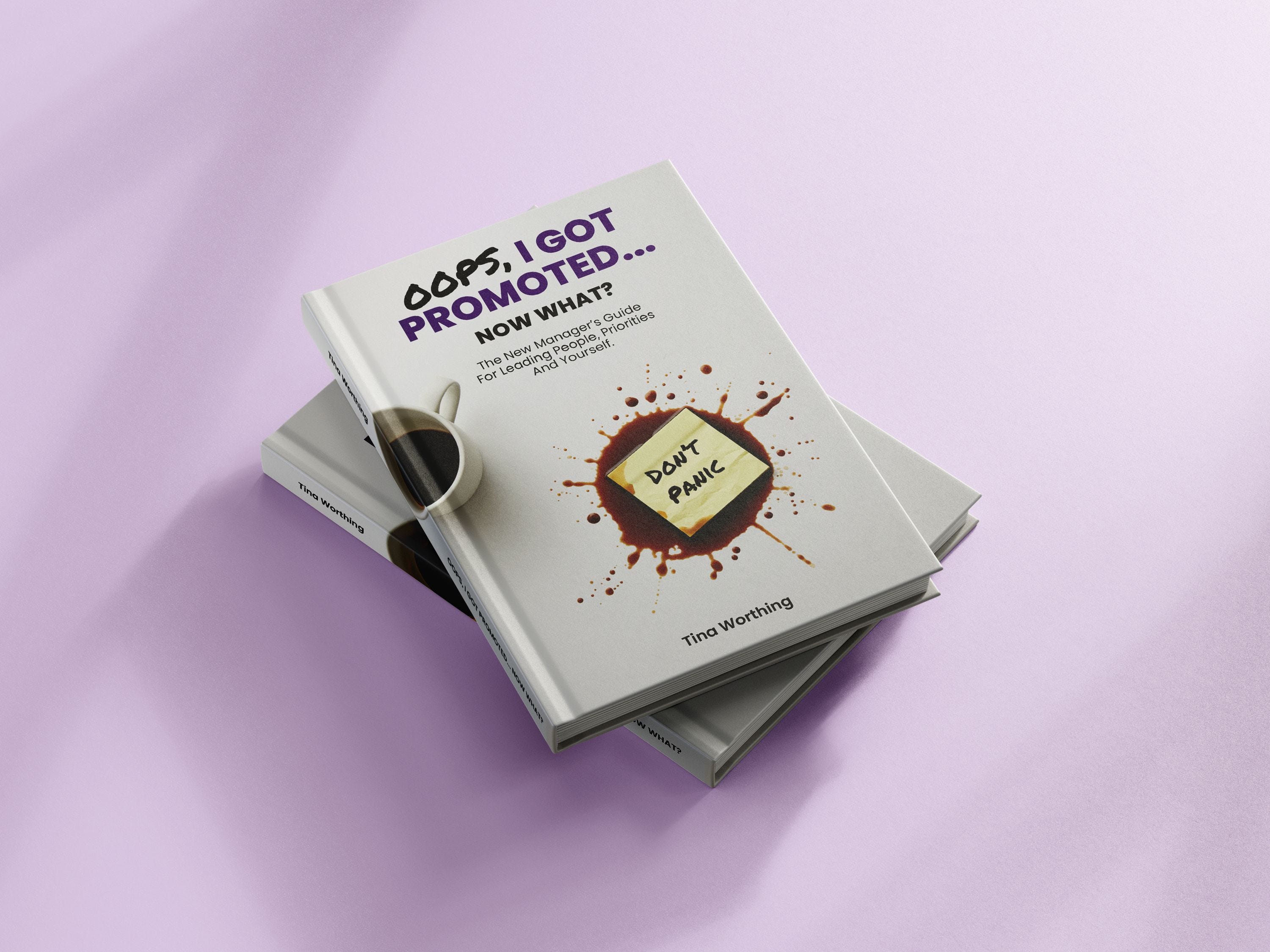
Oops, I Got Promoted…Now What? - Promotion doesn’t come with instructions…it does now! Covering everything from shifting relationships and staying organised, to managing conflict and delegating without guilt, “Oops, I Got Promoted...Now What?” is the handbook every new manager needs (not so new managers can learn a thing or two as well).
If you want to lead confidently, knowing you’re doing the right thing by yourself and your team, this is the resource for you.
Aventina Training - Website
The Promotion Paradox is taking a break next week. The next issue is scheduled for 30 June.
What I like about this is how it separates intent from default behavior. Most people don’t choose ‘bad management’ per se. They choose the fastest option under pressure, and that usually becomes the normal pattern.
Happy Tuesday evening to you Tina.
Loved the ending as I was mostly B but on occasion would drift to a D - there was a couple where I would do multi choice - like #6 where I would first go C then B as I'd want to make sure I was picking up the person correctly - my wife reads people better than I and will often point out the circumstance that could be contributing to the offness - like they have a baby and of course they are exhausted - I've found it safer to curb my assumptions.